
According to Food Code Proper Food Labels Should Not Contain

Understanding the Importance of Food Labeling
Proper food labeling is essential for consumer safety, regulatory compliance, and transparent communication. The food code sets strict standards for what should and should not appear on food labels to ensure that consumers have accurate information about ingredients, allergens, nutritional content, and handling instructions. Misleading or inaccurate labels can not only harm consumers but also result in regulatory penalties for food businesses.
Food labeling is more than just a marketing tool; it is a critical aspect of food safety, helping customers make informed choices, prevent allergic reactions, and avoid contamination risks. By adhering to the food code, manufacturers, restaurants, and retailers maintain trust and credibility with their customers.
What Food Labels Should Not Contain
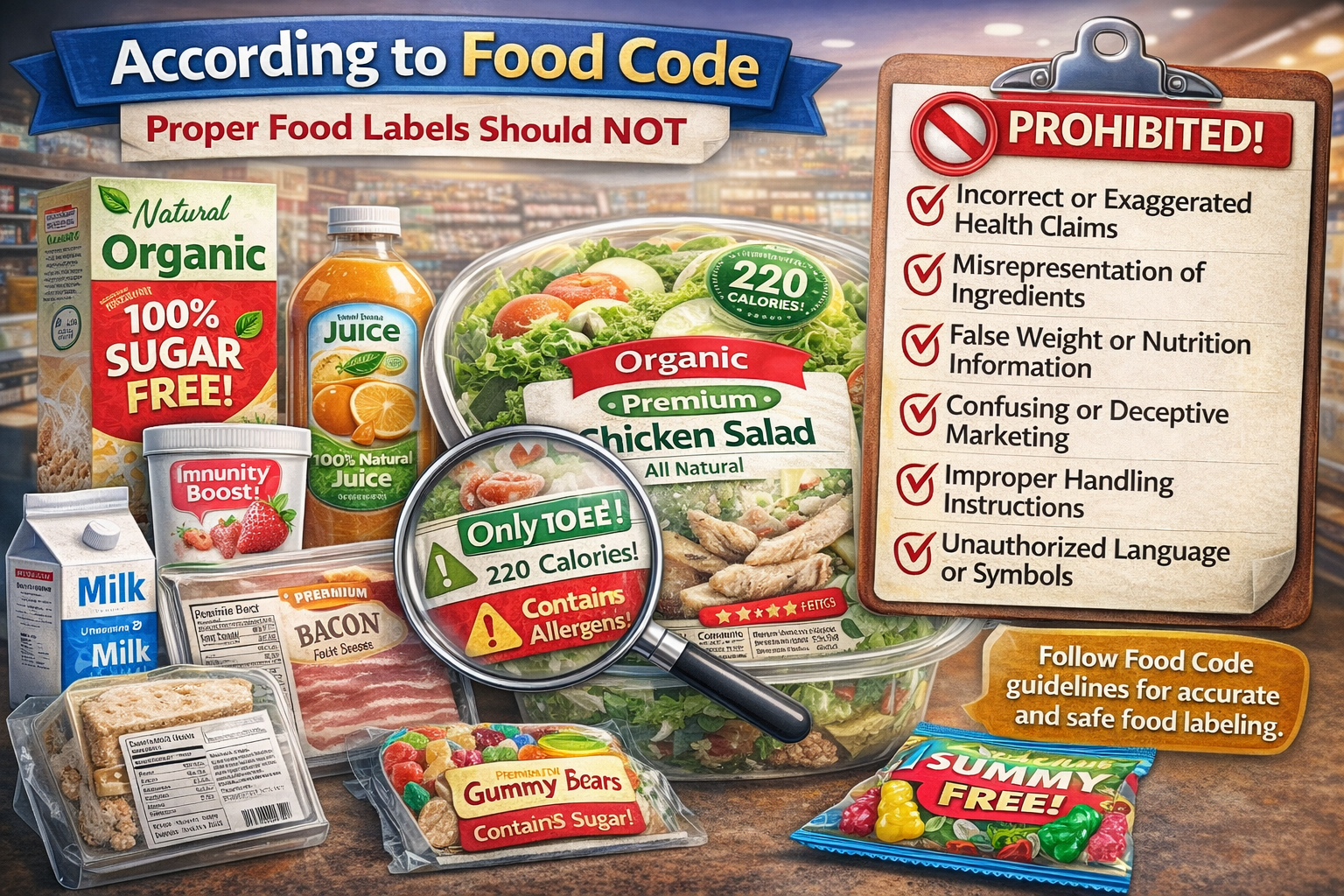
According to the food code, proper food labels must not contain false or misleading information. Some examples include:
- Incorrect or exaggerated health claims: Labels should not suggest that a food prevents or cures diseases unless approved by regulatory authorities.
- Misrepresentation of ingredients: Food labels should not list ingredients that are absent or omit allergens that are present.
- False weight or volume: The stated net weight or serving size must match the actual content in the packaging.
- Inaccurate nutrition information: Nutritional facts, including calories, fat, sugar, and sodium content, must be precise and not misleading.
- Confusing or deceptive marketing terms: Words like “organic,” “natural,” or “fresh” must comply with regulatory definitions; otherwise, they can mislead consumers.
- Improper handling or storage instructions: Labels must clearly convey safe storage, cooking, and handling practices; omitting these instructions can create safety risks.
- Unauthorized language or symbols: Symbols, logos, or endorsements that are not approved should not appear on food packaging.
Why Avoiding Misleading Labels Matters
Misleading or inaccurate food labels can cause serious consequences for both consumers and businesses. For consumers, incorrect labeling can lead to allergic reactions, dietary complications, or exposure to unsafe products. For businesses, noncompliance with the food code can result in fines, product recalls, and reputational damage.
Adhering to the food code ensures transparency and accountability. It protects vulnerable populations, such as children, the elderly, and people with chronic illnesses, by providing accurate information about the foods they consume.
Key Practices for Food Businesses
Food businesses can prevent labeling errors by:
- Conducting regular audits of packaging and label content
- Training staff on food code compliance and labeling standards
- Using standardized templates for nutrition facts and ingredient lists
- Keeping records of ingredient sourcing and allergen management
- Consulting with regulatory experts to verify claims and certifications
Promoting Consumer Trust Through Accurate Labels
Accurate, clear, and compliant food labels not only meet regulatory requirements but also foster consumer trust and loyalty. By avoiding false or misleading information, food brands position themselves as responsible and reliable, helping customers make safe, informed choices.
Conclusion
Proper food labels are more than a legal requirement—they are a critical component of food safety, consumer education, and business credibility. According to the food code, labels must not contain false, misleading, or inaccurate information, including incorrect ingredients, nutrition facts, or health claims. Food businesses that prioritize accurate labeling protect their customers and strengthen their brand reputation, while consumers benefit from the transparency and confidence that proper labeling provides.

