
What Is the Most Realistic Prop Money?

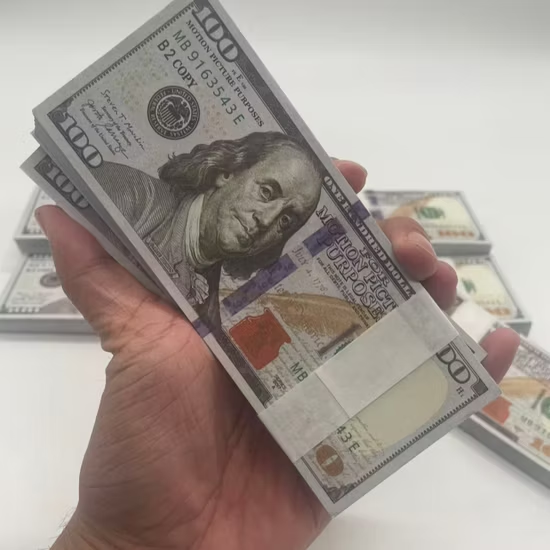
The most realistic prop money is high-grade film prop currency designed to look almost identical to real banknotes in size, color, layout, and texture, but modified slightly so it cannot be used as real currency. Professional prop houses produce these notes specifically for movies, music videos, photography, commercials, and social media content. The highest-quality versions are often called “hero prop money” or “high-grade prop bills”, which are detailed enough for close-up camera shots.
In simple terms, the most realistic prop money is the type used in major productions where stacks of cash appear completely authentic on screen while still being legally safe to use.
Features That Make Prop Money Look Real
Not all fake cash looks convincing. The best realistic prop money has several key features that make it believable in films and photography.
1. Accurate Size and Design
Professional prop notes are printed in the same dimensions as real currency, with carefully recreated designs, patterns, and color tones. This ensures the bills look authentic both in hand and on camera.
2. High-Quality Printing
The most realistic prop currency uses offset printing techniques similar to real banknote printing, producing sharp details and realistic color gradients. These details help the money look convincing even in high-resolution video or photography.
3. Realistic Texture and Paper
Premium prop money often uses special paper materials that mimic the texture and weight of genuine cash, giving actors a natural feel when handling the bills during scenes.
4. Film-Ready Cash Bundles
Many realistic prop sets come in bundled stacks of bills, which can be used for scenes involving safes, suitcases, counting money, or dramatic cash displays.
5. Aged or Circulated Look
Some of the most realistic prop bills are aged or distressed so they appear like real money that has been handled and circulated. This subtle detail makes them far more believable on camera.
Where Realistic Prop Money Is Used
The film and entertainment industry relies heavily on realistic prop currency. In fact, many famous productions have used it to create convincing scenes involving large amounts of cash.
Examples include:
- Crime films showing piles of money during heists
- Action movies featuring money explosions or robberies
- TV series where characters hide or count stacks of cash
- Music videos and luxury lifestyle shoots
For example, famous productions like crime dramas and heist films have used prop cash to create dramatic scenes without risking real money.
Using prop currency allows filmmakers to safely create scenes with millions of dollars in cash without financial risk or legal complications.
Why Realistic Prop Money Is Important
Using high-quality prop notes helps filmmakers and content creators achieve professional production value. Cheap fake money often looks unrealistic on camera, which can break the illusion of the scene.
The most realistic prop money allows creators to:
- Film convincing money scenes
- Avoid using real currency on set
- Create large stacks of cash safely
- Produce cinematic visuals for videos and photography
For influencers, filmmakers, and photographers, realistic prop currency can instantly elevate the luxury, drama, and visual impact of a production.
Final Thoughts
The most realistic prop money is high-grade film prop currency designed for professional productions. With accurate dimensions, detailed printing, realistic paper texture, and film-ready stacks, these props provide the perfect illusion of real cash while remaining safe and legal to use.
Whether you’re producing a movie scene, music video, social media shoot, or professional photoshoot, investing in realistic prop money can dramatically enhance the visual storytelling and authenticity of your project.
For premium prop money and production-quality prop currency, visit:
You have not enough Humanizer words left. Upgrade your Surfer plan.

